Best Guide for Health Insurance
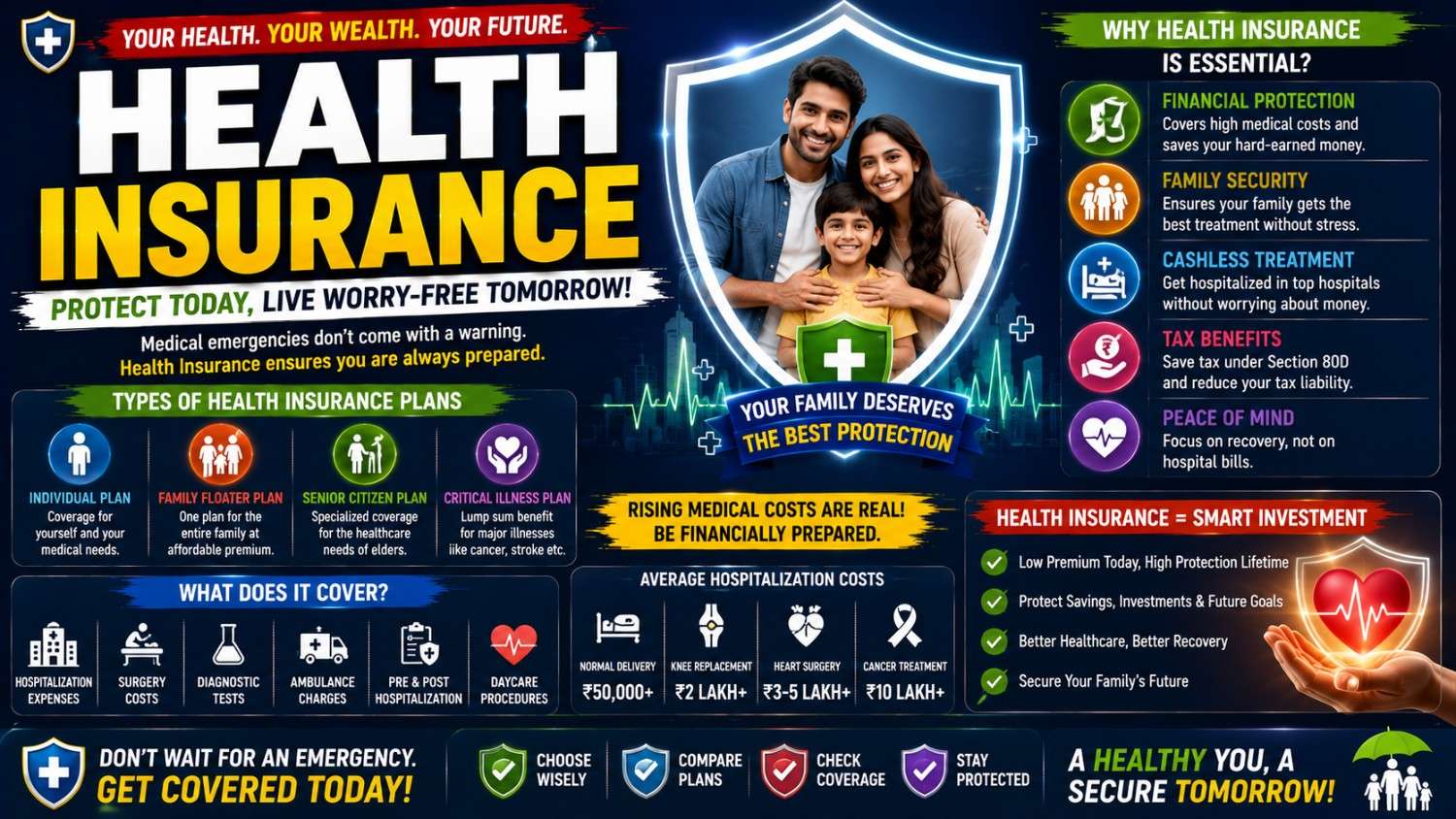
The Ultimate Financial Shield for Your Family's Future
In today's world, healthcare costs are rising at an unprecedented rate. A single hospitalization can wipe out years of savings and put immense financial pressure on families. Medical emergencies often arrive without warning, making health insurance one of the most important financial products every individual should consider.
Health insurance is no longer a luxury—it is a necessity. Whether you are a young professional, a business owner, a parent, or a retiree, having the right health insurance coverage can protect your finances and provide peace of mind during difficult times.
As healthcare expenses continue to increase globally, health insurance plays a crucial role in financial planning, wealth protection, and long-term financial security.
What is Health Insurance?
Health insurance is a contract between an individual and an insurance company that covers medical expenses arising from illness, injury, surgery, hospitalization, and other healthcare services.
In exchange for a premium, the insurance company agrees to cover eligible medical costs according to the policy terms.
Health insurance can help cover:
Hospitalization expenses
Surgery costs
Emergency treatment
Diagnostic tests
Pre and post-hospitalization expenses
Daycare procedures
Critical illness treatment
Ambulance charges
Why Health Insurance is Important
Many people underestimate the impact of medical emergencies until they face one.
Rising Healthcare Costs
Medical inflation is growing faster than general inflation.
Treatments for serious illnesses such as:
Cancer
Heart disease
Kidney failure
Neurological disorders
can cost lakhs or even crores of rupees.
Health insurance helps manage these expenses effectively.
Financial Protection
Without health insurance, families may be forced to:
Use emergency savings
Sell investments
Take loans
Borrow money
Insurance protects your financial goals from being disrupted.
Access to Better Healthcare
Health insurance allows access to quality hospitals, specialists, and advanced treatments without worrying about immediate financial burden.
Benefits of Health Insurance
Cashless Treatment
Most insurers offer cashless hospitalization through network hospitals.
Benefits include:
No upfront payment
Faster admission process
Reduced paperwork
Tax Benefits
Health insurance premiums often qualify for tax deductions under applicable tax laws.
This provides dual benefits:
Financial protection
Tax savings
Protection Against Lifestyle Diseases
Modern lifestyles have increased the prevalence of:
Diabetes
Hypertension
Obesity
Heart disease
Health insurance helps cover treatment costs associated with these conditions.
Family Coverage
Family floater plans allow multiple family members to be covered under a single policy.
This often proves more economical than individual plans.
Types of Health Insurance Plans
Individual Health Insurance
Provides coverage for one person.
Best suited for:
Working professionals
Single individuals
Young adults
Family Floater Plans
Covers an entire family under one sum insured.
Suitable for:
Married couples
Families with children
Joint financial planning
Senior Citizen Health Insurance
Designed specifically for older adults.
Provides coverage for age-related medical conditions.
Critical Illness Insurance
Offers lump-sum benefits upon diagnosis of serious illnesses such as:
Cancer
Stroke
Heart attack
Organ failure
Group Health Insurance
Provided by employers for employees and their families.
Choosing the Right Health Insurance Policy
Selecting the right policy requires careful evaluation.
Coverage Amount
Choose a coverage amount that can handle modern medical costs.
Many financial planners recommend higher coverage for urban families due to rising treatment expenses.
Network Hospitals
A larger hospital network increases access to quality healthcare.
Claim Settlement Ratio
Higher claim settlement ratios indicate better insurer reliability.
Waiting Period
Understand waiting periods for:
Pre-existing diseases
Specific treatments
Maternity benefits
Policy Exclusions
Review exclusions carefully before purchasing any policy.
Health Insurance and Financial Planning
Health insurance is one of the foundations of a strong financial plan.
A complete financial strategy typically includes:
Emergency Fund
Health Insurance
Life Insurance
Retirement Planning
Investments
Wealth Management
Without health insurance, medical emergencies can derail years of financial progress.
Common Mistakes to Avoid
Buying Insurance Too Late
Younger individuals generally receive:
Lower premiums
Better coverage
Easier approval
Choosing the Cheapest Plan
Low-cost plans may provide inadequate protection during major medical emergencies.
Ignoring Policy Terms
Understanding exclusions, waiting periods, and claim processes is essential.
Depending Only on Employer Coverage
Employer-provided insurance may end when employment changes.
Personal health insurance offers continuous protection.
Health Insurance and Retirement
Healthcare expenses often increase significantly after retirement.
Health insurance helps retirees:
Protect retirement savings
Access quality healthcare
Reduce financial stress
Early planning can significantly improve retirement security.
Digital Health Insurance Revolution
Technology is transforming the insurance industry.
Modern insurers offer:
Online policy purchase
Instant premium calculation
Digital claims processing
Telemedicine services
Mobile app management
These innovations have made insurance more accessible than ever.
Future of Health Insurance
Emerging trends include:
AI-powered underwriting
Personalized health plans
Wellness-based rewards
Digital healthcare integration
Preventive healthcare benefits
The industry is rapidly evolving to meet changing consumer needs.
Why Health Insurance is Essential for Financial Freedom
Financial freedom isn't just about earning more money.
It also means protecting your wealth from unexpected risks.
Health insurance:
Protects savings
Prevents debt accumulation
Supports long-term wealth creation
Provides peace of mind
Without adequate coverage, even a single medical emergency can significantly impact financial stability.
Conclusion
Health insurance is one of the smartest financial decisions an individual can make. It protects against rising medical costs, provides access to quality healthcare, and safeguards long-term financial goals.
Whether you are young, middle-aged, or retired, investing in the right health insurance plan can help ensure financial security for yourself and your family. The earlier you start, the better the protection and affordability you can achieve.
Remember, health emergencies are unpredictable, but financial preparedness is a choice. A strong health insurance policy today can become the foundation of a safer, healthier, and more financially secure tomorrow.