B.Sc to University: Your Pathway to Science, Research, and Career Excellence
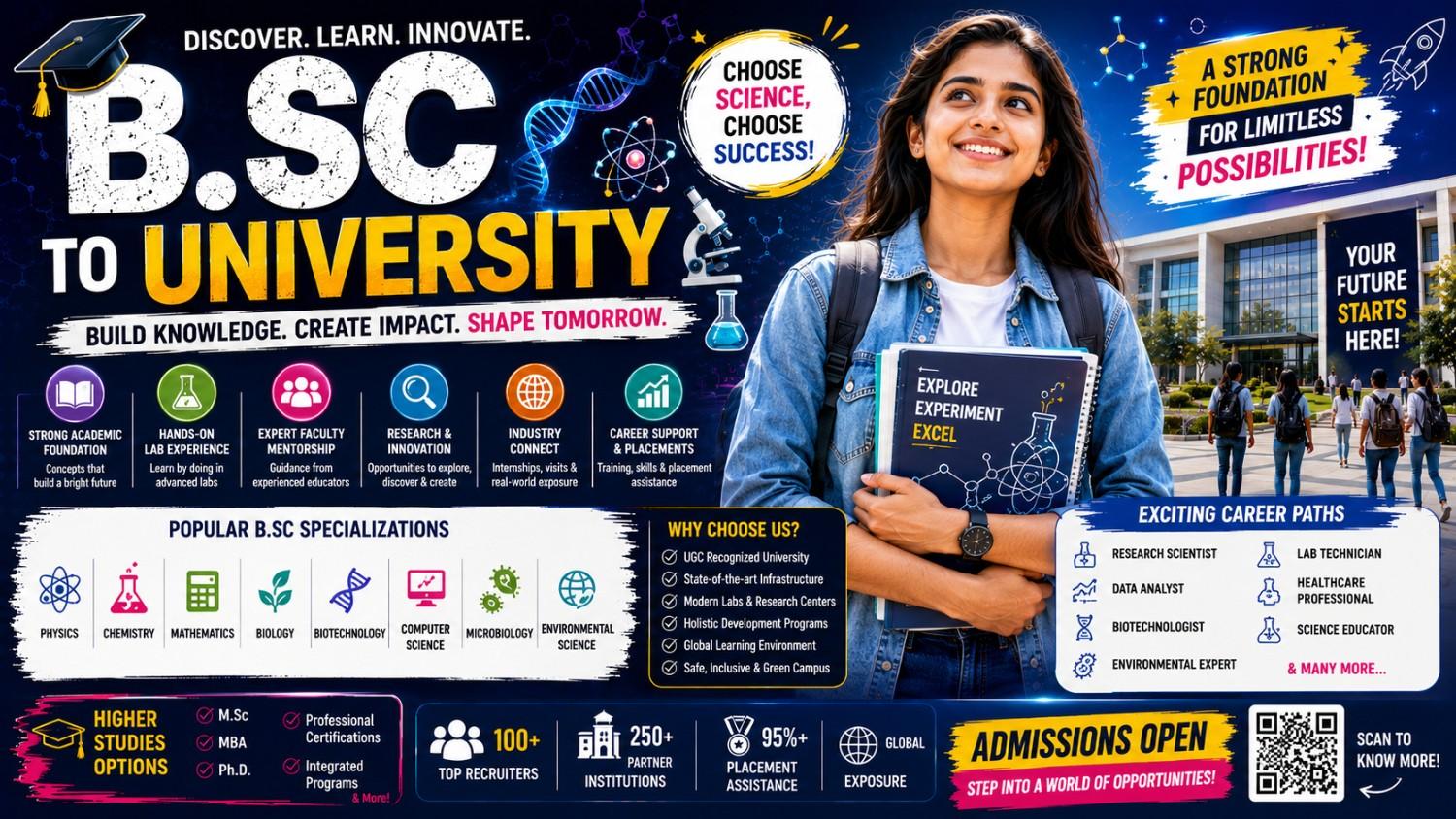
Science has always been at the heart of innovation, discovery, and progress. From groundbreaking medical advancements and technological inventions to environmental sustainability and space exploration, science continues to shape the future of humanity. For students passionate about understanding the world around them and contributing to meaningful advancements, a Bachelor of Science (B.Sc) degree serves as an ideal starting point.
Pursuing a B.Sc degree from a reputed university provides students with a strong academic foundation, practical laboratory experience, research opportunities, and specialized knowledge in their chosen scientific field. Whether you aspire to become a scientist, researcher, healthcare professional, data analyst, educator, or technology expert, a university-based B.Sc program can help you achieve your career goals.
In today's rapidly evolving world, industries are actively seeking skilled science graduates who can solve complex problems, conduct research, analyze data, and drive innovation. Choosing the right university for your B.Sc journey is therefore a crucial step toward building a successful future.
What is a B.Sc Degree?
Bachelor of Science (B.Sc) is a three-year undergraduate degree program focused on scientific principles, analytical thinking, and practical application of knowledge. The program is designed to help students develop a deep understanding of various scientific disciplines while enhancing their research and problem-solving skills.
Students can choose from a wide range of specializations, including:
Physics
Chemistry
Mathematics
Biology
Biotechnology
Computer Science
Microbiology
Environmental Science
Data Science
Statistics
Zoology
Botany
Each specialization offers unique career opportunities and prepares students for both industry roles and higher education.
Why Choose a University for B.Sc?
Universities provide an academic environment that combines classroom learning with practical training, research exposure, and professional development.
Comprehensive Scientific Education
University programs are designed to provide students with both theoretical knowledge and practical understanding. The curriculum focuses on developing critical thinking, scientific reasoning, and analytical skills.
Experienced Faculty
Students learn from highly qualified professors, researchers, and subject matter experts who guide them throughout their academic journey and help them understand advanced scientific concepts.
Advanced Laboratories
Modern universities invest in well-equipped laboratories, research centers, and scientific instruments that allow students to gain hands-on experience and practical exposure.
Research Opportunities
Research is a fundamental component of science education. Universities encourage students to participate in research projects, scientific conferences, innovation competitions, and laboratory studies.
Industry Collaboration
Many universities collaborate with research organizations, healthcare institutions, technology companies, and industrial laboratories to provide internships and practical learning opportunities.
Benefits of Pursuing B.Sc from a Top University
Strong Academic Foundation
A B.Sc degree helps students build a solid understanding of scientific concepts, methodologies, and applications that are essential for future studies and careers.
Development of Analytical Skills
Science education encourages logical thinking, experimentation, observation, and evidence-based decision-making.
Research and Innovation Exposure
Students gain valuable experience through research projects, laboratory experiments, and innovation-driven activities.
Diverse Career Options
A B.Sc degree opens opportunities across multiple industries, including healthcare, education, research, technology, pharmaceuticals, and environmental sciences.
Preparation for Higher Studies
Many students use B.Sc as a stepping stone toward postgraduate studies and specialized professional careers.
Key Factors to Consider When Choosing a B.Sc University
Selecting the right university can significantly impact your educational experience and career growth.
Accreditation and Recognition
Always choose a university recognized by educational authorities and accreditation agencies to ensure quality education and degree credibility.
Laboratory Infrastructure
Practical learning is a core component of science education. Universities with advanced laboratories provide better opportunities for skill development.
Faculty Expertise
Experienced faculty members contribute to stronger academic understanding and research guidance.
Research Facilities
Universities that actively promote student research help learners gain valuable practical experience and academic exposure.
Placement Support
Career services, internship programs, and placement assistance can enhance employment opportunities after graduation.
Industry Partnerships
Collaborations with research institutes, hospitals, laboratories, and companies provide students with valuable industry exposure.
Career Opportunities After B.Sc
A Bachelor of Science degree offers numerous career opportunities across various sectors.
Research Scientist
Research scientists conduct experiments, analyze findings, and contribute to scientific advancements in their chosen fields.
Laboratory Technician
Laboratory professionals support scientific testing, experimentation, and quality control processes.
Data Analyst
Science graduates with analytical and statistical skills are increasingly employed in data-driven industries.
Biotechnology Professional
Biotechnology experts work in healthcare, agriculture, pharmaceuticals, and genetic research organizations.
Environmental Scientist
Environmental professionals help address sustainability challenges and develop solutions for environmental protection.
Healthcare and Clinical Research
Many B.Sc graduates pursue careers in healthcare research, diagnostics, and medical laboratories.
Science Educator
Teaching remains a rewarding career path for science graduates who wish to inspire future generations.
Pharmaceutical Industry Professional
Pharmaceutical companies recruit science graduates for research, quality assurance, manufacturing, and product development roles.
Higher Education Opportunities After B.Sc
A B.Sc degree provides a strong foundation for advanced education and specialization.
Popular options include:
M.Sc (Master of Science)
MBA (Master of Business Administration)
MCA (for Computer Science students)
Data Science Programs
Biotechnology Specializations
Artificial Intelligence and Machine Learning Courses
Research Fellowships
Ph.D. Programs
Higher education allows students to develop expertise in specialized areas and access advanced career opportunities.
Future Scope of B.Sc
The future for science graduates is highly promising. Scientific innovation continues to drive progress across industries such as healthcare, information technology, renewable energy, biotechnology, pharmaceuticals, and environmental sustainability.
Emerging fields creating significant opportunities include:
Artificial Intelligence
Data Science
Biotechnology
Environmental Research
Genomics
Healthcare Technology
Space Science
Renewable Energy
Cybersecurity
Scientific Computing
Organizations worldwide are seeking professionals with scientific knowledge, analytical thinking, and research capabilities to solve complex global challenges.
Why Universities Play a Crucial Role
Universities offer more than just academic education. They create an ecosystem where students can learn, innovate, collaborate, and grow professionally.
Key advantages include:
Academic excellence
Research exposure
Innovation opportunities
Industry interactions
Professional networking
Skill development programs
Global learning experiences
These factors help students build confidence and prepare for successful careers.
Conclusion
A Bachelor of Science (B.Sc) degree is an excellent choice for students who are passionate about science, research, innovation, and discovery. It provides a strong academic foundation, practical experience, and diverse career opportunities across multiple industries.
Choosing a reputable university ensures access to quality education, modern laboratories, experienced faculty, research facilities, and career support services. Whether your goal is to pursue higher studies, contribute to scientific research, enter the healthcare sector, or build a successful professional career, a university-based B.Sc program can help you achieve your aspirations.
With dedication, curiosity, and continuous learning, a B.Sc degree can become the gateway to a rewarding future filled with opportunities, innovation, and lifelong growth.