B.Tech: Your Gateway to a Successful University Education and Career 2026
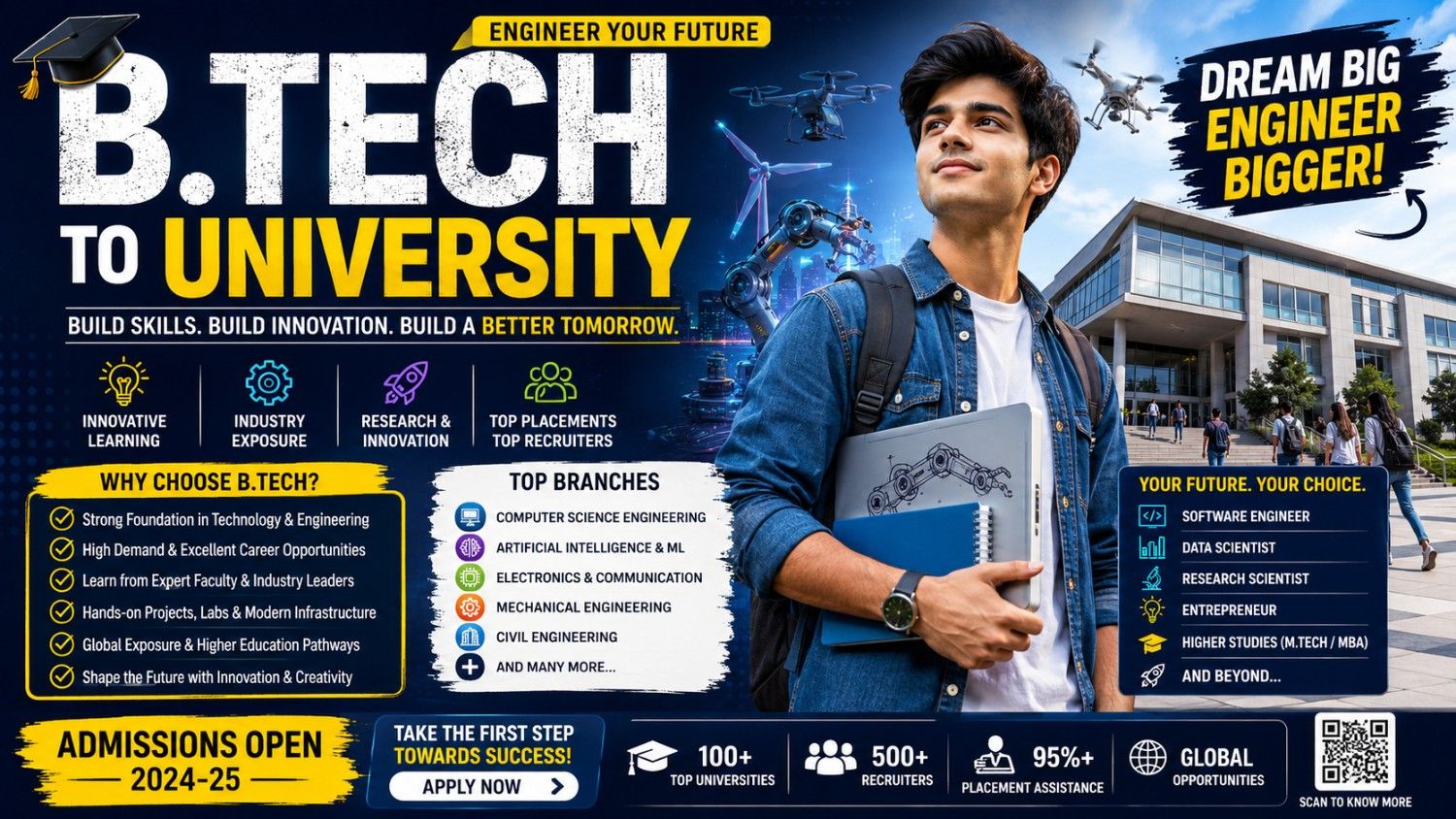
B.Tech: Your Gateway to a Successful University Education and Career
In today's technology-driven world, engineering remains one of the most sought-after career paths among students. A Bachelor of Technology (B.Tech) degree provides students with the knowledge, skills, and practical experience required to excel in various industries. Pursuing a B.Tech from a reputed university not only opens doors to high-paying career opportunities but also helps students develop problem-solving abilities, technical expertise, and leadership qualities.
As industries continue to evolve with advancements in artificial intelligence, data science, robotics, cloud computing, and sustainable technologies, the demand for skilled engineers is increasing rapidly. This makes choosing the right university for a B.Tech program one of the most important decisions in a student's academic journey.
What is a B.Tech Degree?
Bachelor of Technology (B.Tech) is a four-year undergraduate professional degree designed to provide students with a strong foundation in engineering and technology. The program combines theoretical knowledge with practical learning through laboratory work, projects, internships, and industry exposure.
Students can choose from various specializations such as:
Computer Science Engineering (CSE)
Information Technology (IT)
Mechanical Engineering
Civil Engineering
Electrical Engineering
Electronics and Communication Engineering (ECE)
Artificial Intelligence and Machine Learning (AI & ML)
Data Science
Biotechnology Engineering
Aerospace Engineering
Each specialization offers unique career opportunities and caters to different industry requirements.
Why Choose a University for B.Tech?
Universities provide a comprehensive learning environment that goes beyond classroom education. They offer advanced infrastructure, experienced faculty, research opportunities, and industry collaborations that help students gain a competitive advantage.
1. Quality Education
Top universities focus on delivering a curriculum that aligns with current industry trends and technological advancements. Students gain both theoretical understanding and practical skills that prepare them for real-world challenges.
2. Experienced Faculty
Universities employ highly qualified professors, researchers, and industry experts who guide students throughout their academic journey. Their mentorship helps students gain deeper insights into engineering concepts and emerging technologies.
3. Modern Infrastructure
Leading universities invest in state-of-the-art laboratories, innovation centers, libraries, research facilities, and smart classrooms. These resources enhance the learning experience and encourage innovation among students.
4. Research and Innovation Opportunities
Universities encourage students to participate in research projects, technical competitions, hackathons, and innovation programs. Such experiences help students develop critical thinking and problem-solving skills.
5. Industry Exposure
Many universities collaborate with leading companies to provide internships, industrial visits, workshops, and training programs. These opportunities allow students to understand industry practices and gain valuable hands-on experience.
Key Factors to Consider When Choosing a B.Tech University
Selecting the right university can significantly impact a student's future career. Here are some important factors to consider:
Accreditation and Recognition
Always choose a university recognized by relevant educational authorities and accreditation bodies. Accredited institutions maintain high academic standards and ensure quality education.
Placement Record
A university's placement performance reflects its reputation among employers. Students should evaluate placement statistics, average salary packages, top recruiters, and internship opportunities before making a decision.
Faculty and Curriculum
A strong curriculum combined with experienced faculty members ensures students receive industry-relevant education and practical exposure.
Infrastructure
Modern laboratories, research facilities, libraries, and campus amenities contribute significantly to a student's learning and overall development.
Industry Collaborations
Universities with strong industry partnerships provide better opportunities for internships, live projects, certifications, and placements.
Research Opportunities
Students interested in innovation and higher education should consider universities with active research programs and funding opportunities.
Benefits of Pursuing B.Tech from a Top University
Strong Technical Foundation
A quality B.Tech program equips students with technical knowledge and practical skills required to solve complex engineering challenges.
Better Career Opportunities
Graduates from reputed universities often receive job offers from leading multinational companies, startups, and government organizations.
Higher Salary Potential
Engineering graduates from top institutions generally enjoy competitive salary packages due to their strong academic background and industry readiness.
Global Exposure
Many universities offer international exchange programs, collaborative research initiatives, and partnerships with foreign institutions that provide global learning experiences.
Entrepreneurial Development
Universities increasingly support entrepreneurship through incubation centers, startup mentorship programs, and innovation hubs, enabling students to transform ideas into successful businesses.
Career Opportunities After B.Tech
A B.Tech degree opens numerous career paths across industries. Some of the most popular options include:
Software Engineer
Software engineers design, develop, and maintain applications, websites, and software systems for businesses and consumers.
Data Scientist
Data scientists analyze large datasets to help organizations make informed decisions and improve operational efficiency.
Artificial Intelligence Engineer
AI engineers develop intelligent systems and machine learning models used in automation, healthcare, finance, and various other sectors.
Civil Engineer
Civil engineers plan, design, and supervise construction projects such as roads, bridges, buildings, and infrastructure developments.
Mechanical Engineer
Mechanical engineers work in manufacturing, automotive, aerospace, and energy sectors to design and improve mechanical systems.
Electrical Engineer
Electrical engineers develop and maintain electrical systems, power generation equipment, and electronic devices.
Research Scientist
Students interested in innovation and advanced studies can pursue research careers in universities, laboratories, and technology organizations.
Higher Education Options After B.Tech
Many students choose to continue their education after completing a B.Tech degree. Popular options include:
M.Tech (Master of Technology)
MBA (Master of Business Administration)
MS Abroad
Data Science Certifications
Artificial Intelligence Specializations
Government Service Examinations
Research and Ph.D. Programs
Higher education helps students specialize in their chosen field and improve their career prospects.
Future Scope of B.Tech
The future of engineering is closely linked with technological innovation. Emerging fields such as artificial intelligence, machine learning, cybersecurity, renewable energy, robotics, blockchain, and quantum computing are creating exciting opportunities for engineering graduates.
As businesses increasingly rely on technology to drive growth and innovation, the demand for qualified engineers is expected to remain strong for years to come. Students who continuously upgrade their skills and stay updated with industry trends will enjoy excellent career growth and job security.
Conclusion
A B.Tech degree from a reputed university serves as a strong foundation for a successful career in engineering, technology, research, and innovation. The right university not only provides quality education but also equips students with practical skills, industry exposure, and professional networks that contribute to long-term success.
Choosing a university should involve careful consideration of factors such as accreditation, faculty, infrastructure, placements, research opportunities, and industry collaborations. With the right education and dedication, a B.Tech degree can open doors to countless opportunities and pave the way for a rewarding and fulfilling professional journey.