Financial Tool for Smart Spending, Rewards, and Credit Building
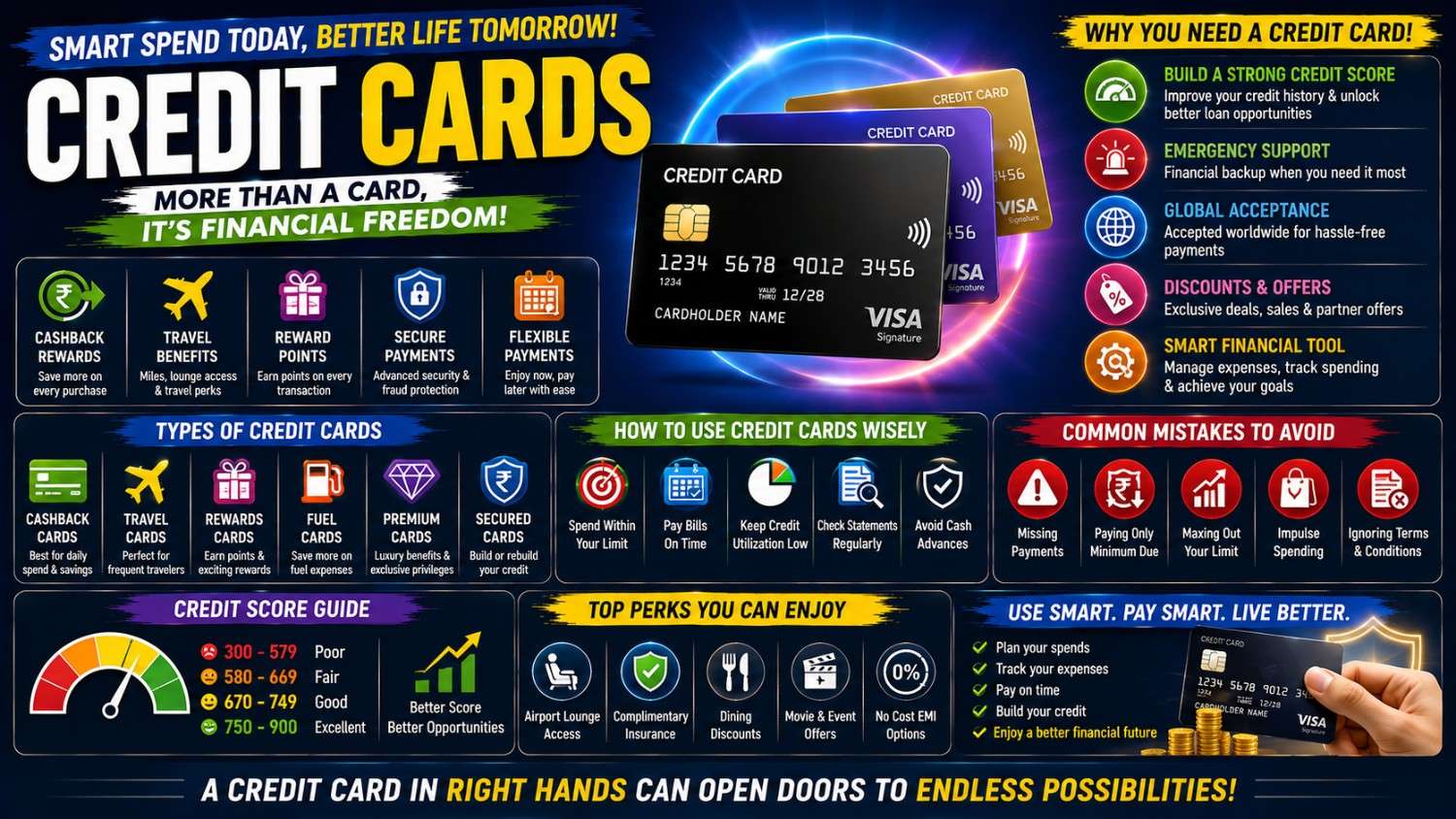
Credit Cards: The Ultimate Financial Tool for Smart Spending, Rewards, and Credit Building
In today's digital economy, credit cards have become much more than just a payment method. They are powerful financial tools that offer convenience, rewards, security, and opportunities to build a strong credit profile.
Millions of consumers worldwide use credit cards daily for shopping, travel, online payments, bill payments, and financial management. When used responsibly, a credit card can provide significant financial benefits, including cashback rewards, travel benefits, purchase protection, and improved credit scores.
However, many people either misunderstand how credit cards work or fail to use them effectively. Understanding the benefits and responsibilities associated with credit cards can help individuals maximize rewards while avoiding debt traps.
What is a Credit Card?
A credit card is a financial instrument issued by banks and financial institutions that allows users to borrow money up to a predefined credit limit for purchases and transactions.
Unlike debit cards, which use money directly from your bank account, credit cards allow you to spend first and pay later.
Each month, the card issuer provides a billing statement showing:
Total spending
Minimum payment due
Outstanding balance
Payment due date
Cardholders can either pay the full amount or carry a balance subject to interest charges.
Why Credit Cards Are So Popular
Credit cards offer numerous benefits that make them one of the most widely used financial products globally.
Convenience
Credit cards eliminate the need to carry cash and allow seamless online and offline transactions.
Global Acceptance
Most credit cards are accepted internationally, making them ideal for travelers and online shoppers.
Enhanced Security
Credit cards provide protection against fraud and unauthorized transactions.
Many cards offer:
Zero liability protection
Fraud alerts
Transaction monitoring
Purchase protection
Emergency Financial Support
In unexpected situations, credit cards can provide temporary financial flexibility.
Benefits of Using a Credit Card
Cashback Rewards
Many credit cards offer cashback on purchases.
Common cashback categories include:
Grocery shopping
Fuel purchases
Dining
Online shopping
Utility bill payments
Cashback rewards effectively reduce overall spending costs.
Travel Rewards
Premium travel credit cards provide:
Airline miles
Hotel rewards
Airport lounge access
Travel insurance
Complimentary upgrades
Frequent travelers can save substantial amounts through reward programs.
Reward Points
Every eligible transaction earns points that can be redeemed for:
Merchandise
Travel bookings
Gift vouchers
Statement credits
Reward optimization has become a popular personal finance strategy.
Interest-Free Period
Most credit cards provide a grace period during which no interest is charged if the balance is paid in full.
This can help manage short-term cash flow efficiently.
Building a Strong Credit Score
One of the most important benefits of a credit card is its impact on credit scores.
A strong credit score improves eligibility for:
Home Loans
Personal Loans
Car Loans
Business Loans
Better Interest Rates
How Credit Cards Improve Credit Scores
Responsible credit card usage demonstrates financial discipline.
Key practices include:
Paying bills on time
Maintaining low credit utilization
Avoiding missed payments
Keeping accounts active
Consistent responsible behavior can significantly strengthen your credit profile.
Types of Credit Cards
Different credit cards are designed for different spending habits and financial goals.
Cashback Credit Cards
Best for individuals seeking savings on everyday purchases.
Travel Credit Cards
Ideal for frequent flyers and travelers.
Rewards Credit Cards
Offer points-based reward systems.
Fuel Credit Cards
Provide discounts and rewards on fuel purchases.
Premium Credit Cards
Include luxury benefits such as:
Concierge services
Lounge access
Travel insurance
Exclusive offers
Secured Credit Cards
Designed for individuals looking to establish or rebuild credit history.
Common Credit Card Mistakes
Paying Only the Minimum Due
Many users mistakenly pay only the minimum amount required.
This can result in:
High interest charges
Growing debt balances
Financial stress
Missing Payment Deadlines
Late payments can:
Damage credit scores
Trigger penalties
Increase borrowing costs
Maxing Out Credit Limits
High credit utilization negatively affects credit scores.
Experts generally recommend keeping utilization below 30%.
Impulse Spending
Credit cards should support financial goals, not encourage unnecessary spending.
Credit Card Security Tips
Protecting your financial information is essential.
Enable Transaction Alerts
Instant notifications help identify unauthorized activity quickly.
Use Secure Websites
Only make online purchases from trusted and secure platforms.
Avoid Sharing Card Details
Never disclose:
CVV number
OTP codes
Passwords
Monitor Statements Regularly
Review transactions to detect suspicious activity promptly.
Credit Cards and Financial Planning
Credit cards should be integrated into a broader financial strategy.
When used correctly, they can help:
Build credit history
Earn rewards
Improve cash flow management
Enhance financial flexibility
However, they should never replace emergency funds or long-term investments.
Credit Cards vs Debit Cards
Credit Cards
Advantages:
Rewards and cashback
Credit score building
Fraud protection
Emergency spending capacity
Debit Cards
Advantages:
No debt accumulation
Direct access to available funds
Simpler budgeting
Many financially successful individuals use both strategically.
Future of Credit Cards
The banking industry is rapidly evolving.
Emerging trends include:
Contactless Payments
Virtual Credit Cards
AI Fraud Detection
Digital Wallet Integration
Personalized Reward Programs
Buy Now Pay Later (BNPL) Features
Technology continues to make credit cards safer, smarter, and more convenient.
Credit Cards and Financial Freedom
Financial freedom is often associated with investing and wealth creation, but responsible credit management also plays an important role.
A well-managed credit card can:
Improve creditworthiness
Reduce borrowing costs
Generate valuable rewards
Increase financial flexibility
When combined with budgeting, investing, and saving, credit cards become powerful tools for long-term financial success.
Conclusion
Credit cards are among the most valuable financial tools available today. They provide convenience, security, rewards, and opportunities to build strong credit profiles. However, maximizing their benefits requires responsible usage and disciplined financial habits.
By paying balances on time, maintaining low utilization, earning rewards strategically, and avoiding unnecessary debt, individuals can leverage credit cards to improve their financial well-being.
Used wisely, a credit card is not just a payment method—it is a gateway to better financial management, stronger credit health, and greater financial opportunities in the future.