How to Get a Business Loan Without Collateral in India (2026 Guide)
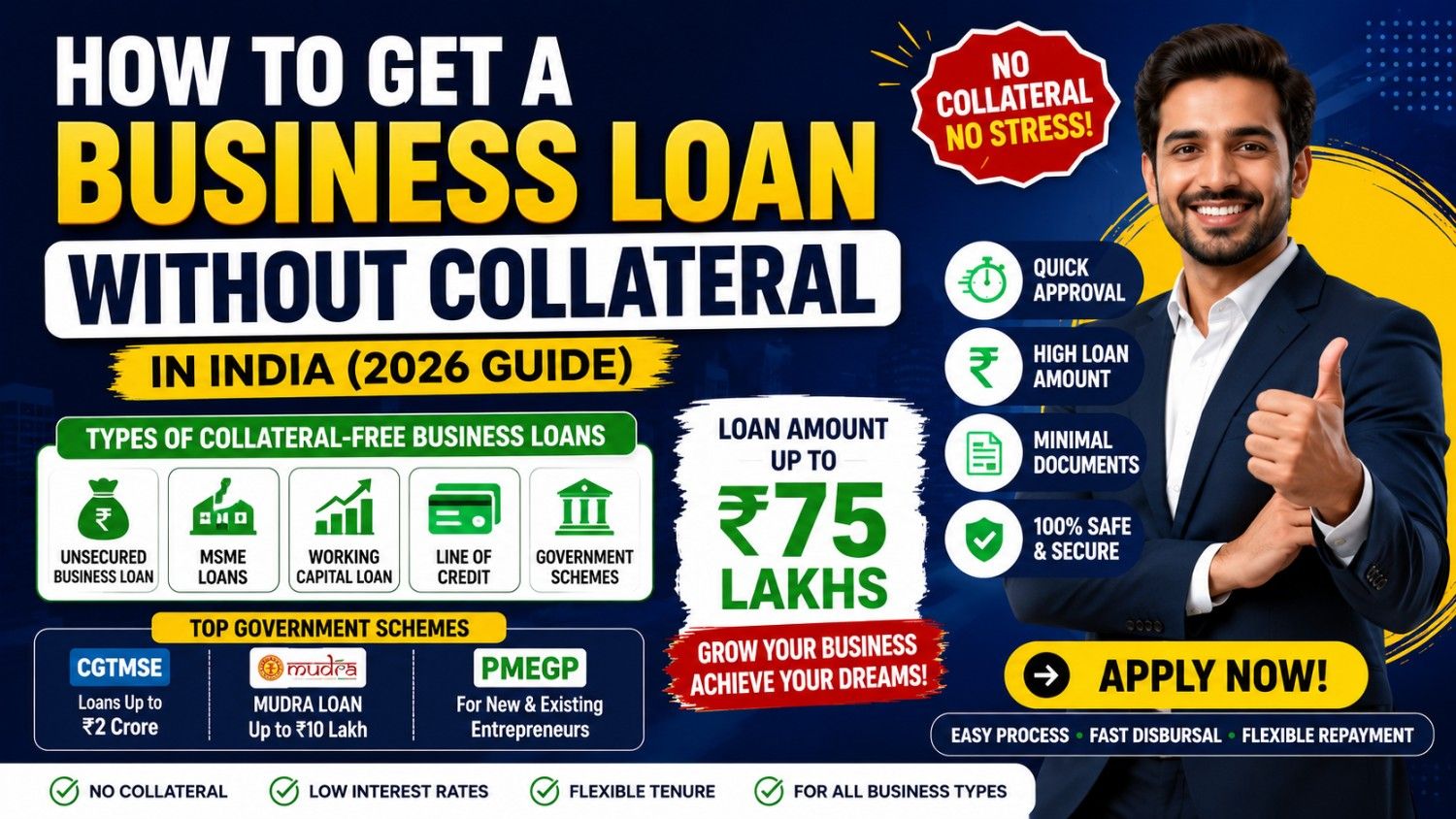
Starting or expanding a business requires capital, but not every entrepreneur has valuable assets to pledge as security. Traditionally, banks required collateral such as property, fixed deposits, or machinery before approving business loans. However, the financial landscape in India has evolved significantly over the past decade.
Today, entrepreneurs, startups, freelancers, and small business owners can access unsecured business loans without providing collateral. Thanks to government initiatives, fintech innovation, and digital lending platforms, obtaining funding has become easier than ever.
This comprehensive guide explains how to get a business loan without collateral in India, eligibility requirements, available options, and tips to improve your approval chances.
What Is a Collateral-Free Business Loan?
A collateral-free business loan, also known as an unsecured business loan, allows business owners to borrow money without pledging any assets as security.
Unlike secured loans, lenders evaluate factors such as:
Business revenue
Credit score
Bank transaction history
Business age
Financial stability
Repayment capability
Since lenders take on more risk, interest rates may be slightly higher than secured loans. However, the convenience and accessibility make these loans attractive for many businesses.
Benefits of Collateral-Free Business Loans
1. No Asset Requirement
Business owners do not need to mortgage property, equipment, or savings.
2. Faster Approval
Digital lenders often approve applications within 24 to 72 hours.
3. Easy Documentation
Most lenders require only basic business and financial documents.
4. Flexible Usage
Funds can be used for:
Working capital
Inventory purchase
Marketing campaigns
Employee salaries
Equipment upgrades
Business expansion
5. Preserves Ownership
Unlike equity funding, business loans do not require giving up ownership or shares.
Types of Collateral-Free Business Loans Available in India
1. Unsecured Business Loans
Banks and NBFCs provide unsecured loans based on business performance and creditworthiness.
Loan Amount:
₹50,000 to ₹75 Lakhs
Repayment Period:
1 to 7 years
2. MSME Loans
Micro, Small, and Medium Enterprises can access government-backed financing schemes.
These loans are designed to support:
Manufacturers
Service providers
Traders
Startups
3. Working Capital Loans
Ideal for managing daily business operations and short-term cash flow requirements.
4. Line of Credit
Businesses receive a credit limit and borrow funds whenever required.
Interest is charged only on the amount utilized.
5. Government-Supported Loans
Several government initiatives encourage entrepreneurship through collateral-free funding.
Government Schemes for Collateral-Free Business Loans
CGTMSE Scheme
The Credit Guarantee Fund Trust for Micro and Small Enterprises (CGTMSE) is one of India's most popular programs.
Benefits include:
No collateral requirement
Government-backed guarantee
Support for small businesses and startups
The scheme helps banks lend to businesses with reduced risk.
PMEGP
Prime Minister's Employment Generation Programme supports new entrepreneurs.
Eligible sectors include:
Manufacturing
Service industries
Rural enterprises
MUDRA Loans
MUDRA (Micro Units Development and Refinance Agency) loans are available under three categories:
Shishu
Up to ₹50,000
Kishore
₹50,000 to ₹5 Lakhs
Tarun
₹5 Lakhs to ₹10 Lakhs
These loans are especially beneficial for small businesses and first-time entrepreneurs.
Eligibility Criteria for Business Loans Without Collateral
Although criteria vary among lenders, common requirements include:
Age Requirement
Applicants are generally required to be between 21 and 65 years old.
Business Vintage
Most lenders prefer businesses operating for at least 1 to 3 years.
Annual Revenue
Stable and consistent business income is essential.
Credit Score
A credit score above 700 significantly improves approval chances.
Business Registration
Registered businesses typically receive better consideration.
Accepted business structures include:
Proprietorship
Partnership
LLP
Private Limited Company
Documents Required
To apply for a collateral-free business loan, you may need:
Identity Proof
Aadhaar Card
PAN Card
Passport
Voter ID
Address Proof
Utility bills
Aadhaar Card
Rental agreement
Business Proof
GST Registration
Shop Establishment Certificate
Udyam Registration
Financial Documents
Bank statements
Income Tax Returns
Profit and Loss statements
Balance sheets
Additional Documents
Business license
Partnership deed
Company incorporation certificate
Best Lenders Offering Collateral-Free Business Loans
Banks
Traditional banks continue to provide unsecured business financing.
Advantages:
Competitive interest rates
Established reputation
Larger loan amounts
NBFCs
Non-Banking Financial Companies often have more flexible eligibility requirements.
Advantages:
Faster approvals
Simplified paperwork
Startup-friendly policies
Fintech Platforms
Digital lenders use technology-driven assessments.
Advantages:
Instant application process
Quick approvals
Paperless documentation
Many fintech lenders provide approvals within hours.
Step-by-Step Process to Get a Business Loan Without Collateral
Step 1: Assess Funding Requirements
Calculate exactly how much capital your business needs.
Avoid borrowing more than necessary.
Step 2: Check Your Credit Score
Review your credit report before applying.
A healthy score increases approval chances and may secure better rates.
Step 3: Compare Lenders
Evaluate:
Interest rates
Processing fees
Repayment tenure
Customer reviews
Step 4: Gather Documentation
Keep all required documents ready before applying.
Step 5: Submit Application
Complete the application online or through a branch.
Step 6: Verification Process
Lenders review:
Financial records
Bank transactions
Business performance
Step 7: Loan Approval and Disbursal
Upon approval, funds are transferred directly to your business account.
Tips to Improve Approval Chances
Maintain Strong Financial Records
Accurate bookkeeping demonstrates business stability.
File Taxes Regularly
Consistent tax filings improve credibility.
Build a Good Credit History
Pay EMIs and credit card bills on time.
Reduce Existing Debt
A lower debt burden increases lender confidence.
Keep Business Transactions Digital
Digital transaction records make financial analysis easier.
Apply for a Realistic Amount
Lenders are more likely to approve loans aligned with your revenue profile.
Common Reasons for Loan Rejection
Poor Credit Score
Late payments and defaults negatively impact approvals.
Insufficient Business History
Very new businesses may struggle to qualify.
Inconsistent Revenue
Unstable cash flow raises concerns for lenders.
Incomplete Documentation
Missing documents often delay or reject applications.
High Existing Debt
Excessive liabilities may reduce repayment capacity.
Frequently Asked Questions
Can startups get collateral-free business loans?
Yes. Many fintech lenders and government schemes support startups, though approval depends on business viability and founder credentials.
What is the maximum loan amount available without collateral?
Depending on the lender and business profile, unsecured loans can exceed ₹75 lakhs.
Is GST registration mandatory?
Not always, but GST registration strengthens loan applications and improves credibility.
How quickly can I receive funds?
Digital lenders may disburse funds within 24 to 72 hours after approval.
Conclusion
Collateral-free business loans have transformed financing opportunities for Indian entrepreneurs. Whether you operate a startup, small business, or growing enterprise, numerous lending options are now available without requiring property or assets as security.
By maintaining a strong credit profile, keeping accurate financial records, and choosing the right lender, you can significantly improve your chances of securing funding. Government-backed schemes, fintech lenders, and traditional financial institutions continue to expand access to business credit, helping entrepreneurs achieve their growth goals.
As India's business ecosystem evolves in 2026 and beyond, collateral-free loans will remain a powerful tool for innovation, expansion, and long-term success.